

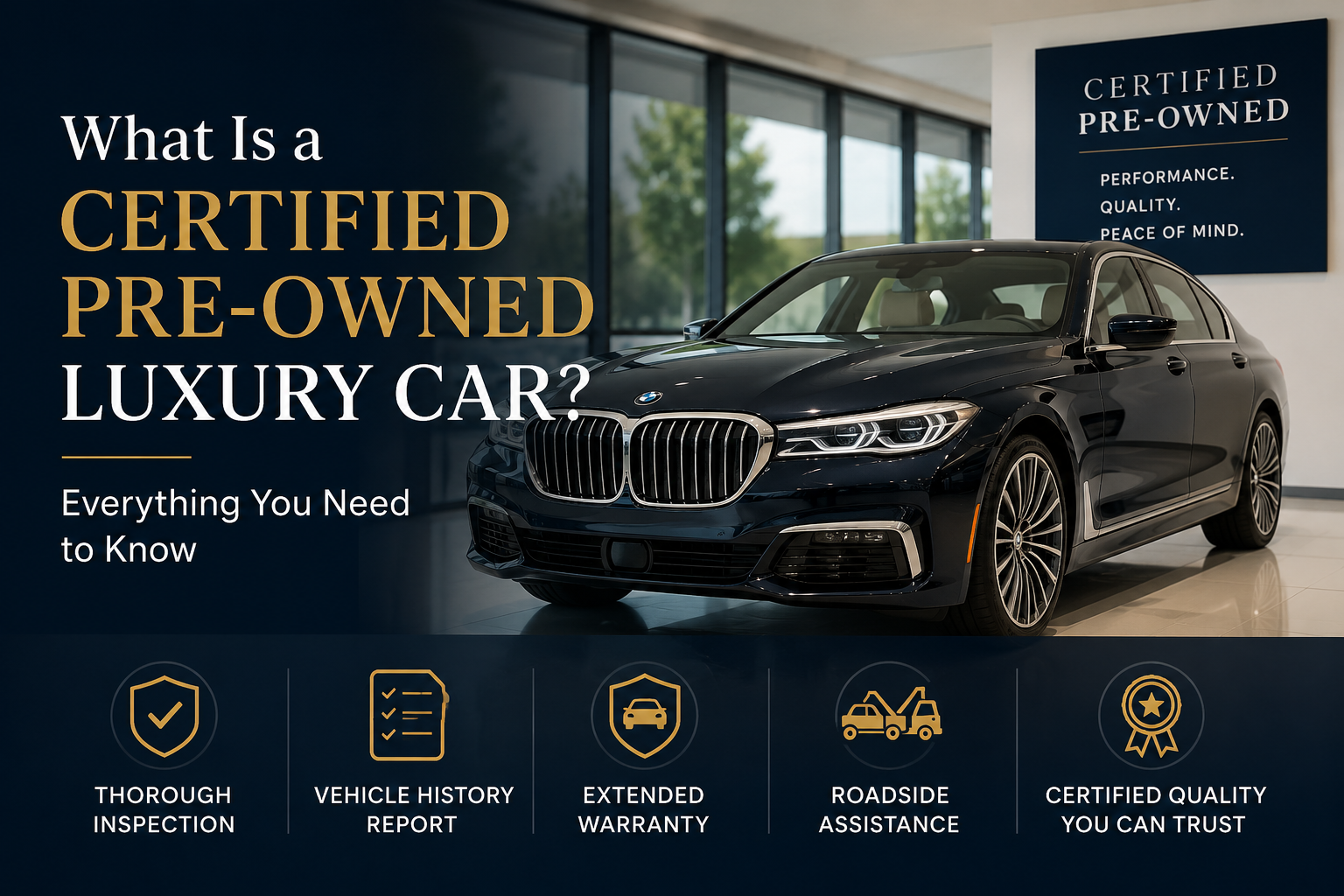

What Is a Certified Pre-Owned Luxury Car? Everything You Need to Know
A pre-owned luxury car is more than a used vehicle with a premium badge; it’s a carefully inspected, manufacturer-backed (or dealer-certified) luxury vehicle sold with warranty protections and a transparent history. For buyers in Delhi, Gurgaon, Noida, and nearby areas, certified pre-owned (CPO) luxury cars close the gap between new-car prestige and used-car value, offering lower depreciation, verified condition, and peace of mind. This guide from CarStreetIndia explains how CPO programs work, what inspections include, key differences from regular used luxury cars, pros and cons, buying tips, and local considerations so you can decide confidently.
What “Certified Pre-Owned” Means
Definition and scope
A Certified Pre-Owned Luxury Car (CPO) is a used high-end vehicle that has passed a formal inspection and reconditioning process defined by the manufacturer or a franchised dealer. Certification typically includes multi-point mechanical and cosmetic inspections, vehicle history verification, mileage limits, and an extended warranty or limited coverage.
Who certifies the car?
Manufacturers (BMW, Mercedes-Benz, Audi, Lexus, Jaguar, etc.), authorized dealer groups, and trusted independent luxury dealers (like CarStreetIndia’s certified inventory) can run CPO programs. Manufacturer programs usually provide the strongest guarantees.
Typical eligibility criteria
Age and mileage caps (commonly under 5–6 years and below 80,000–100,000 km), clean title, no major accident history, full service records, and passing the program’s inspection checklist.

How CPO Programs Differ from Regular Used Luxury Cars
- Inspection and reconditioning: Thorough multi-point checks vs. ad-hoc inspections.
- Warranty: Manufacturer-backed or dealer warranty vs. usually “sold as-is.”
- Vehicle history: Certified VIN checks and accident history vs. variable transparency.
- Pricing: Premium over non-certified used cars, but below new-car prices.
- Return policies: Some CPO cars come with short return windows; used cars typically do not.
Why Buyers Choose a Pre-Owned Luxury Car
- Stronger value proposition: Lower depreciation, predictable costs.
- Reduced risk: Certified inspections and warranties reduce unknowns.
- Ready-to-drive luxury: Reconditioned aesthetic and mechanical items restore a premium feel.
- Access to features: More spec for the budget, e.g., a 3-year-old Mercedes E-Class with high-end options for significantly less than a new one.
- Financing and offers: Attractive financing rates and occasional service packages with manufacturer CPO programs.
Typical CPO Inspection Checklist (What Dealers Look For)
- Exterior: Paint condition, dents, rust, lights, windshield, and seals.
- Interior: Upholstery wear, electronics, infotainment, air conditioning, safety systems.
- Powertrain: Engine performance, transmission shifts, oil leaks, belts, hoses.
- Undercarriage: Suspension, steering components, exhaust, chassis integrity.
- Brakes and wheels: Pads, discs, tyres, wheel alignment.
- Electrical: Battery, alternator, sensors, cameras, parking aids.
- Safety equipment: Airbags, seatbelts, ABS, and traction control systems.
- Vehicle history: VIN verification, service records, and accident and flood checks.
- Road test: Performance under load, noise checks, shifting, and braking feel.
What’s Usually Repaired or Replaced
- Wear items: Brake pads, tyres, filters, and fluids.
- Cosmetic fixes: Paint touch-ups, minor dents, interior detailing.
- Electronics updates: Infotainment patches, sensor recalibration.
- Major repairs (if needed): Engine or transmission work — often done before certification or the car fails certification.
Warranty and Coverage Explained
Types of warranties
- Manufacturer CPO warranty: Often limited bumper-to-bumper for a specified period plus powertrain coverage and roadside assistance.
- Dealer-backed warranty: Varies by dealer; may be shorter or limited to specific components.
- Extended warranty options: Third-party plans can top up coverage but check exclusions carefully.
Typical inclusions
Powertrain coverage, limited bumper-to-bumper items, roadside assistance, year/mileage limits.
What’s usually excluded
Regular wear-and-tear (tyres, brake pads), improper maintenance damage, modifications, and cosmetic-only issues.
Cost Comparison: CPO vs New vs Regular Used
Price positioning (typical)
- New luxury car: highest cost, full new-car warranty.
- Certified Pre-Owned Luxury Car: mid-range; usually 20–40% less than new depending on age/spec; has added warranty/value.
- Regularly used luxury car: lowest cost but highest risk and often higher immediate maintenance expense.
Ownership cost factors to consider
- Insurance (may be lower than new), fuel and running costs, scheduled maintenance, depreciation curve, and expected repairs once warranty expires.
- Used luxury cars, certified pre-owned program, luxury car warranty, pre-owned BMW, pre-owned Mercedes, inspected used cars, dealer-certified cars, pre-owned vehicle history, and used car inspection checklist.
Local Considerations for Buyers in Delhi and Nearby Cities
Climate and road impacts
- Delhi’s dust, traffic-caused wear, and temperature extremes affect air filters, suspensions, and brakes. Inspect AC performance and cabin filtration closely.
Flood and monsoon checks
- Inspect electrical systems and undercarriage for corrosion; verify service records for any flooding incidents (important for Noida and Gurgaon low-lying areas).
Service network and parts availability
- Manufacturer-backed CPOs usually ensure access to genuine parts and authorized service centers (useful across Delhi NCR).
Local resale preferences
- Popular pre-owned luxury brands in Delhi: Mercedes-Benz, BMW, Audi, and Lexus; demand affects resale values.
Where to buy
- Manufacturer-certified outlets, trusted dealer groups, and reputed multi-brand CPO dealers like CarStreetIndia operating in Delhi and nearby cities.
Buying Guide: Step-by-Step for Purchasing a Pre-Owned Luxury Car
- Set a budget and non-negotiables (model, year, mileage, must-have features).
- Choose certification type: manufacturer vs dealer vs independent, weigh warranty strength and price.
- Check service history and ownership records; verify VIN.
- Inspect the car (or hire an independent inspector) using a multi-point checklist.
- Test drive on varied roads, city traffic and highway where possible.
- Review warranty terms, exclusions, and roadside assistance details.
- Negotiate price considering reconditioning investment and remaining warranty.
- Confirm transfer of warranty and complete paperwork: RTO transfer, insurance update, and service booklet handover.
- Plan for first service interval and any recommended maintenance after purchase.

Expert Tips (from industry experience at CarStreetIndia)
- Prioritize manufacturer CPOs for cars older than three years; warranty and standardization matter more as cars age.
- Always verify odometer consistency with service records and CCT/garage stamps.
- Use a VIN decoder and check with authority databases for theft or salvage history.
- Don’t skip a road test; some issues surface only under load or at higher speeds.
- Negotiate with reconditioning costs in mind — minor cosmetic work is fine but major powertrain problems should be priced or rejected.
- For Delhi buyers, ask for recent AC service and cabin filter replacement due to heavy pollution and heat.
- Consider certified pre-owned hybrids or EVs carefully: battery health and unique warranties are critical (ask for battery capacity reports where available).
Pros and Cons of Buying a Pre-Owned Luxury Car
Pros
- Lower depreciation than new cars.
- Manufacturer or dealer-backed warranties and roadside assistance.
- Thorough inspection and reconditioning.
- More luxury for the budget, higher trims at lower prices.
Cons
- Higher price than non-certified used cars.
- Warranty terms vary; exclusions matter.
- Possible remaining cosmetic issues despite certification.
- Limited selection compared to the private-party used market.
Comparison Table: CPO vs Regular Used vs New Luxury Car
|
Feature |
New Luxury Car |
Certified Pre-Owned (CPO) Luxury Car |
Regular Used Luxury Car |
|
Price |
High |
Medium |
Low |
|
Warranty |
Full New-Car Warranty |
Limited / Extended Warranty |
Usually None |
|
Inspection |
Factory-New Condition |
Formal Multi-Point Inspection |
Variable (Depends on Seller) |
|
Depreciation |
Highest Initial Depreciation |
Moderate Depreciation |
Lower Ongoing Depreciation |
|
Risk |
Lowest Risk |
Low to Moderate Risk |
High Risk |
Buying from Dealership vs Private Seller
Dealership (CPO)
- Pros: Warranty, documented history, reconditioning, finance options.
- Cons: Higher price, potential upsells.
Private Seller
- Pros: Lower price, negotiable.
- Cons: No warranty, limited recourse, riskier history.
How to Verify a CPO Claim (Checklist)
- Ask for certification documentation and program brochure.
- Verify VIN against manufacturer/dealer database.
- Confirm the warranty transferability and exact coverage limits.
- Get copies of inspection reports and service invoices.
- Cross-check mileage with earlier service stamps.
- Check for branded certificates (e.g., Mercedes-Benz Certified, BMW Premium Selection).
Financing and Insurance Tips
- Financing: Banks and NBFCs often offer competitive rates for manufacturer-certified cars. Compare loan-to-value, tenor, and prepayment penalties.
- Insurance: Premiums often fall between new and older used-car rates; request insurance transfer and review coverage limits.
- Gap insurance: Consider if you owe more than market value during the loan period.
- Maintenance packages: Some CPO programs include discounted service plans factor those into total cost of ownership.
Maintenance and Ownership Costs After Purchase
- Scheduled servicing: Follow the manufacturer's schedule to keep the warranty valid.
- Wear items: Expect to replace tyres, brake pads sooner than on new cars depending on prior use.
- Parts cost: Luxury parts are expensive; verify local service center rates in Delhi, Gurgaon, and Noida.
- Depreciation: CPO cars still depreciate but at a slower rate than new vehicles.
Common Misconceptions About CPO Luxury Cars
- CPO means ‘like new’: Not always, reconditioning varies by program.
- All CPO warranties are identical: Warranty breadth and duration differ across manufacturers and dealers.
- Lower risk = zero risk: Warranty helps, but post-warranty repairs can be expensive.
- CPO is only for high-mileage cars: Many CPOs have strict mileage caps; you’ll find low-mileage examples too.
FAQ
Q1. What is the difference between a pre-owned luxury car and a certified pre-owned car?
A pre-owned luxury car is any used luxury vehicle. A certified pre-owned car has passed a formal inspection and carries a warranty and documented history.
Q2. Are manufacturer CPO programs better than dealer certification?
Manufacturer CPO programs usually offer standardized inspections, stronger warranties, and nationwide support. Dealer certifications can still be good but check scope and warranty carefully.
Q3. How long is a typical CPO warranty?
Warranty length varies: common terms are 12–24 months or additional mileage-based coverage. Some manufacturer programs offer up to several years of powertrain coverage depending on age at sale.
Q4. Can I get financing for a certified pre-owned luxury car?
Yes. Banks, NBFCs, and manufacturer financing arms offer loans for CPO cars, often with competitive interest rates compared to regular used-car loans.
Q5. Should I buy a CPO luxury hybrid or EV?
Only after verifying battery health reports and warranty coverage for the battery and electric components. Battery replacement can be costly outside warranty.
Q6. Does certification guarantee no past accidents?
Certification includes history checks, but minor past repairs may exist. Always request inspection reports and service records.
Q7. Is buying a CPO car in Delhi safe considering local road conditions?
Yes, if you follow due diligence: verify certification, inspect for undercarriage and AC issues, and confirm service history. Prefer manufacturer CPOs for stronger after-sales support in Delhi NCR.
Q8. What are the common extra costs after buying a CPO luxury car?
Transfer charges, first post-purchase service, tire and brake replacements if worn, and potential accessory fitments or updates.
Expert Recommendation
Based on industry experience at CarStreetIndia, prioritize manufacturer-certified vehicles where available for peace of mind. For budget-conscious buyers, a dealer-certified CPO from a trusted group offers good value if you obtain full inspection reports and a transferable warranty. In Delhi NCR, ensure the dealership provides local service backup and a clear history free from monsoon/flood damage. Always negotiate with reference to inspection findings and factor future maintenance costs into the offer.
Conclusion
Buying a pre-owned luxury car is an intelligent way to enjoy premium features at a lower cost while retaining important protections through certification and warranties. For buyers in Delhi, Gurgaon, Noida, and surrounding areas, CarStreetIndia recommends choosing manufacturer-certified options when possible, verifying inspection reports, and prioritizing service network access. Ready to view certified pre-owned luxury cars near you? Browse CarStreetIndia’s certified inventory or contact our Delhi team for inspection-backed listings and expert guidance.



Recent Comments