

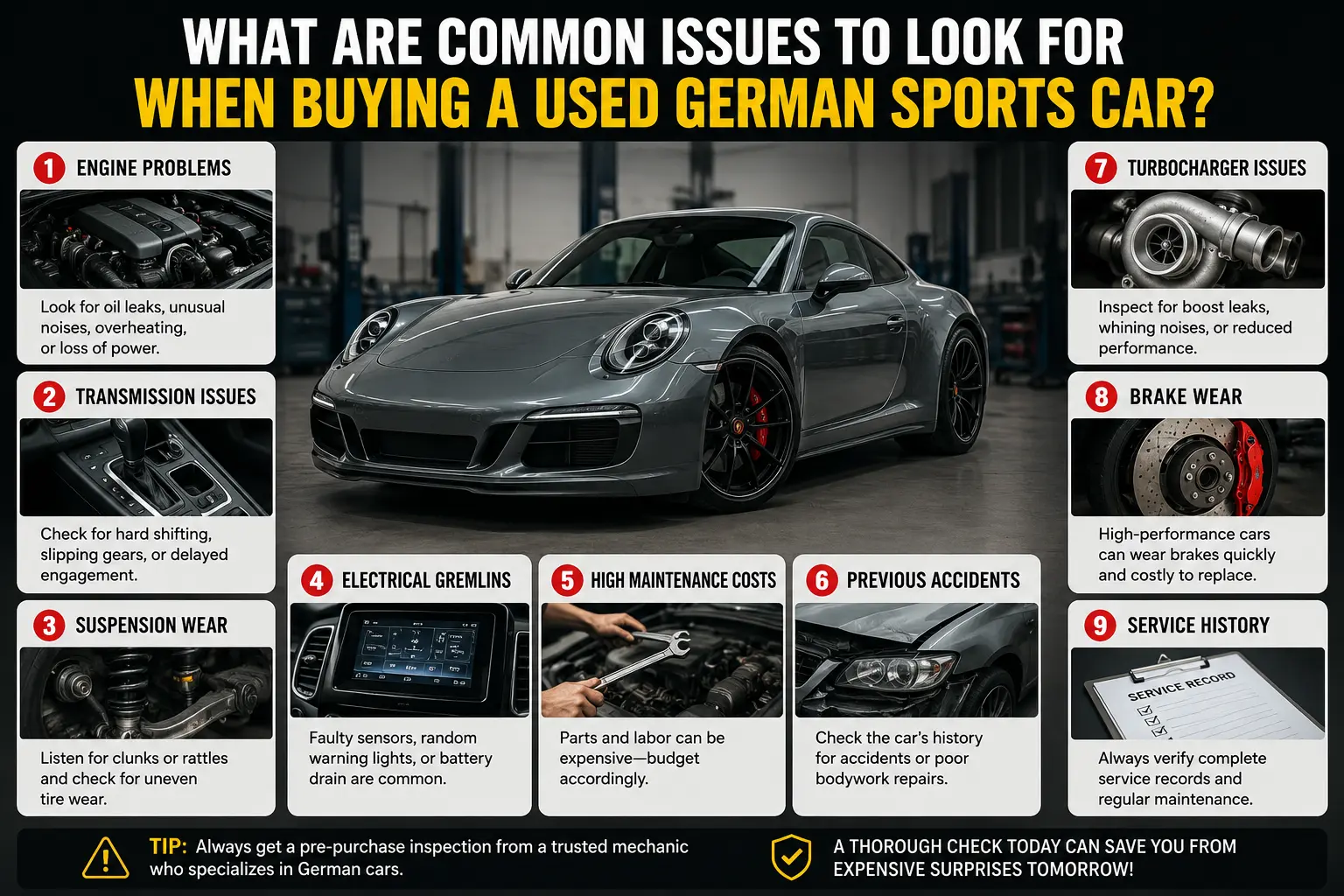

What Are Common Issues to Look for When Buying a Used German Sports Car?
German sports cars are known for their performance, engineering, luxury, and driving experience. Brands like Porsche, BMW, Mercedes-Benz, and Audi have built a strong reputation among car enthusiasts worldwide. Buying a used German sports car can be an excellent way to enjoy premium performance without paying the high price of a brand-new vehicle.
However, purchasing a pre-owned performance car comes with certain risks. Many sports cars are driven aggressively, modified by previous owners, or neglected when maintenance costs become expensive. If you are planning to buy a used German sports car, you should inspect several critical areas before making your decision.
This guide explains the most common issues to look for and helps you avoid costly repairs after purchase.
Why Buy a Used German Sports Car?
Many drivers choose a used German sports car because it offers exceptional value. New luxury sports cars often lose a significant portion of their value within the first few years. This depreciation creates opportunities for buyers to purchase high-end vehicles at much lower prices.
Benefits include:
- Lower purchase price
- Premium engineering and performance
- Advanced technology features
- Luxury interiors
- Strong driving dynamics
While these advantages are appealing, careful inspection is essential to avoid expensive surprises.
Check the Vehicle's service history.
One of the first things to examine is the maintenance history.
German sports cars require regular servicing. Missing maintenance records may indicate neglect or hidden problems. Ask for complete service documentation, including:
- Oil changes
- Brake service records
- Transmission maintenance
- Cooling system repairs
- Major component replacements
A well-documented service history shows that previous owners cared for the vehicle properly.
If the seller cannot provide maintenance records, proceed with caution.
Engine Problems to Watch For
The engine is the heart of any sports car. Repairs on German performance engines can be extremely expensive.
Oil Leaks
Oil leaks are among the most common issues in older German vehicles. Inspect the engine bay and the area beneath the car for signs of leaking oil.
Common leak locations include:
- Valve cover gaskets
- Oil pan gaskets
- Timing covers
- Rear main seals
Ignoring oil leaks can lead to major engine damage over time.
Excessive Oil Consumption
Some German sports cars consume more oil than expected. While a small amount may be normal, excessive consumption could indicate:
- Worn piston rings
- Valve seal issues
- Internal engine wear
Ask the owner how often they add oil between services.
Engine Warning Lights
Always check for warning lights on the dashboard. An illuminated check engine light may signal issues with the following:
- Sensors
- Fuel injection systems
- Ignition components
- Emissions equipment
A professional diagnostic scan can reveal hidden fault codes.
Transmission Issues
Sports cars rely heavily on their transmission systems. Repairs can cost thousands of dollars.
Manual Transmission Problems
If the car has a manual gearbox, look for:
- Grinding gears
- Difficult shifting
- Clutch slippage
- Unusual noises
A worn clutch is common in older performance vehicles.
Automatic and Dual-Clutch Transmission Issues
Many German sports cars use advanced automatic or dual-clutch transmissions.
Watch for:
- Delayed gear changes
- Jerking during shifts
- Warning lights
- Transmission fluid leaks
These systems deliver excellent performance but can be costly to repair.
Suspension Wear and Damage
German sports cars feature sophisticated suspension systems designed for handling and comfort.
Unfortunately, suspension repairs are often expensive.
Signs of Suspension Problems
Look for:
- Uneven tire wear
- Clunking noises
- Vehicle pulling to one side
- Excessive bouncing
- Poor ride quality
Performance driving places extra stress on suspension components.
Common Parts That Wear Out
Frequently replaced items include:
- Control arms
- Bushings
- Ball joints
- Shock absorbers
- Struts
A thorough inspection can help identify these issues before purchase.
Brake System Condition
Sports cars require powerful braking systems.
Brake repairs on German performance vehicles often cost more than standard cars because they use premium components.
Inspect:
- Brake pad thickness
- Rotor condition
- Brake fluid quality
- Brake line integrity
During a test drive, the car should stop smoothly without vibrations or unusual noises.
Performance Brake Systems
Some models feature larger performance brakes or ceramic brake systems.
These components provide excellent stopping power but can be extremely expensive to replace.
Always verify their condition before buying.
Electrical System Problems
Modern German sports cars include advanced electronics.
While these features improve comfort and performance, electrical issues are common in older vehicles.
Common Electrical Faults
Look for problems with:
- Power windows
- Navigation systems
- Digital displays
- Parking sensors
- Lighting systems
- Climate control
Electrical diagnostics can become complicated and costly.
Battery and Charging System
Weak batteries often cause unexpected electrical problems.
Check:
- Battery age
- Alternator performance
- Charging voltage
A failing charging system can trigger multiple warning lights.
Cooling System Issues
Performance engines generate significant heat.
A faulty cooling system can quickly lead to engine damage.
Components to Inspect
Pay close attention to:
- Radiators
- Water pumps
- Thermostats
- Coolant hoses
- Expansion tanks
Coolant leaks should never be ignored.
Signs of Overheating
Warning signs include:
- Rising temperature gauge
- Coolant smells
- Steam from the engine bay
- Low coolant levels
Engine overheating can result in expensive repairs.
Turbocharger Problems
Many German sports cars use turbocharged engines.
Turbochargers improve performance but add complexity.
Symptoms of Turbo Issues
Watch for:
- Loss of power
- Excessive exhaust smoke
- Whining noises
- Boost pressure faults
Turbo replacement costs can be substantial.
Maintenance Matters
Regular oil changes help extend turbocharger life.
Vehicles with poor maintenance records may face turbo-related issues.
Inspect for Accident Damage
Many sports cars experience aggressive driving or track use.
Always check for signs of previous accidents.
What to Look For
Inspect:
- Uneven panel gaps
- Paint inconsistencies
- Misaligned body panels
- Frame repairs
- Welding marks
Professional bodywork inspections can uncover hidden structural damage.
Vehicle History Reports
A vehicle history report can reveal:
- Accident records
- Insurance claims
- Ownership history
- Mileage inconsistencies
This information helps you make a more informed decision.
Signs of Poor Modifications
Many enthusiasts modify their German sports cars.
Some upgrades improve performance, while others create reliability issues.
Common Modifications
Examples include:
- ECU tuning
- Aftermarket exhaust systems
- Lowered suspension
- Turbo upgrades
- Custom wheels
Why Modifications Matter
Poor-quality modifications can:
- Reduce reliability
- Void warranties
- Increase maintenance costs
- Cause engine stress
If modifications are present, ask for documentation and professional installation records.
Tire Condition and Alignment
Tires provide valuable clues about a vehicle's condition.
Uneven Tire Wear
Uneven wear patterns may indicate:
- Suspension problems
- Poor alignment
- Aggressive driving habits
Matching Tire Brands
High-performance cars perform best with quality tires.
Avoid vehicles fitted with cheap or mismatched tires, as this may suggest poor maintenance practices.
Check for Mileage Fraud
Mileage significantly affects vehicle value.
Some dishonest sellers manipulate odometers.
Warning Signs
Be cautious if:
- Service records don't match mileage
- Interior wear seems excessive
- Pedals appear heavily worn
- Steering wheel shows unusual wear
Consistent documentation helps verify mileage accuracy.
Interior Condition Matters
The interior can reveal how well the vehicle was treated.
Inspect:
- Leather seats
- Dashboard condition
- Switches and controls
- Headliner
- Carpets
Excessive wear may indicate heavy use or poor care.
Technology Features
Test every electronic feature, including:
- Bluetooth connectivity
- Audio systems
- Heated seats
- Backup cameras
- Infotainment systems
Repairs to luxury technology features can be expensive.
Listen During the Test Drive
A test drive provides valuable information.
Drive the car under different conditions and pay attention to unusual sounds.
Noises to Watch For
Listen for:
- Engine knocking
- Suspension clunks
- Brake squealing
- Transmission grinding
- Wheel bearing noise
The vehicle should feel smooth, responsive, and stable.
Get a Professional Pre-Purchase Inspection
One of the smartest investments is a pre-purchase inspection.
A qualified mechanic familiar with German performance vehicles can identify hidden issues that buyers often miss.
Benefits of an Inspection
A professional inspection can uncover:
- Engine problems
- Transmission wear
- Suspension damage
- Fluid leaks
- Electrical faults
The inspection cost is small compared to potential repair bills.
Consider Maintenance Costs
Many buyers focus only on purchase price.
However, ownership costs matter just as much.
Typical Expenses
German sports cars often require:
- Premium fuel
- Specialized parts
- Higher labor costs
- Performance tires
- Frequent maintenance
Research expected maintenance expenses before buying.
Popular Used German Sports Car Models
Several German sports cars remain popular in the used market.
Examples include:
- Porsche 911
- BMW M3
- BMW M4
- Audi TT RS
- Audi RS5
- Mercedes-AMG C63
- Porsche Cayman
- BMW Z4
Each model has unique strengths and potential weaknesses, so model-specific research is important.
Frequently Asked Questions (FAQs)
1. Is buying a used German sports car worth it?
Yes, buying a used German sports car can be a great investment if the vehicle has been properly maintained. You can enjoy premium performance, luxury features, and advanced engineering at a significantly lower price than a new model.
2. What is the most reliable used German sports car?
Some of the most reliable options include the Porsche 911, Porsche Cayman, BMW Z4, and Audi TT. Reliability depends largely on maintenance history, mileage, and how the vehicle was driven by previous owners.
3. What should I check before buying a used German sports car?
Before purchasing a used German sports car, inspect the service records, engine condition, transmission, suspension, brakes, cooling system, electrical components, and tires. A professional pre-purchase inspection is also highly recommended.
4. Are German sports cars expensive to maintain?
German sports cars generally cost more to maintain than standard vehicles because they use specialized parts, advanced technology, and performance-focused components. Regular maintenance helps reduce the risk of expensive repairs.
5. How important is the service history of a used German sports car?
Service history is extremely important. A complete maintenance record shows that the vehicle has received proper care and helps identify any major repairs or recurring issues.
6. What are common engine problems in used German sports cars?
Common engine issues include oil leaks, excessive oil consumption, cooling system failures, turbocharger wear, and sensor-related problems. Regular inspections can help identify these issues early.
7. Should I avoid modified German sports cars?
Not necessarily. Professionally installed and documented modifications can be acceptable. However, poorly executed modifications may reduce reliability, increase maintenance costs, and create performance issues.
8. How many miles are too many for a used German sports car?
There is no fixed mileage limit. A well-maintained German sports car with higher mileage can be a better choice than a poorly maintained vehicle with low mileage. Focus on maintenance records and overall condition rather than mileage alone.
9. Why is a pre-purchase inspection important?
A pre-purchase inspection can reveal hidden mechanical, electrical, and structural problems that may not be visible during a test drive. It can save you from unexpected repair costs after purchase.
10. Which German sports car brand holds its value best?
Porsche models, especially the Porsche 911, are known for holding their value exceptionally well. Limited-production performance models from BMW M, Audi RS, and Mercedes-AMG also tend to retain strong resale value.
Conclusion
Buying a used German sports car can be an exciting and rewarding experience. These vehicles offer outstanding performance, luxury, and driving enjoyment at a fraction of their original cost. However, they also require careful inspection and ongoing maintenance.
Before making a purchase, review the service history, inspect the engine, transmission, suspension, brakes, and electrical systems, and always take the car for a thorough test drive. Look for accident damage, poorly executed modifications, cooling system issues, and signs of excessive wear.
Most importantly, invest in a professional pre-purchase inspection. This simple step can save you thousands of dollars and help you choose a reliable used German sports car that delivers years of driving pleasure.
With proper research and careful evaluation, you can confidently find a high-quality used German sports car that matches your budget and performance expectations.





Recent Comments